


Infinite Lives
MDickie
I approached Infinite Lives as the kind of adventure game that asks a simple question: what would happen if a world full of superhumans and subhumans were left open to conflict, ambition, and personal choices? That premise gives the game a broader feel than a straightforward level-by-level adventure. Instead of presenting one narrow path, it encourages me to think about what I want to achieve, how much trouble I am willing to create, and whether progress is worth the risks attached to it.
Developed by MDickie, this is a free mature adventure game for players aged 17 and over. It has already passed 500 thousand installs, and its average rating sits at 4.1 from roughly 6 thousand ratings. Those numbers suggest a game with a recognizable audience, but they do not tell the whole story. The appeal here is less about polished simplicity and more about having room to experiment inside a deliberately chaotic setting.
My main impression is that the game works best when I treat it as an ongoing playground rather than a tightly scripted journey. The early goals are useful, but the real attraction comes from seeing how plans change when other characters, rival groups, and sudden conflicts interfere. That freedom can be entertaining, although it also means players who want constant direction may need patience.
How the game turns open-ended goals into a reason to keep playing
Early goals give the first sessions a sense of purpose
The opening hours benefit from having something concrete to pursue. In an open-ended adventure, it is easy to wander without knowing whether an action matters, so I paid close attention to the small objectives and immediate conflicts. They create a starting point: improve a situation, survive an encounter, build influence, or simply understand how the world reacts when I push against it.
What I like is that the early goals do not need to define the entire experience. They act more like an invitation to learn the rules of the world. A player can begin with a practical target and then discover that the surrounding situation is more complicated than expected. A confrontation that looks manageable may affect relationships, create new opposition, or force a change in priorities. That chain reaction is more interesting to me than a checklist that disappears as soon as it is completed.
Related News

Threads in Real Life: Who Should Join, Lurk, or Leave

How SHEIN Turned Shopping Into an Endless Content Feed

How to Make Fortnite Feel Smarter on Mobile

Should You Switch to Microsoft Outlook on Mobile?

Why Gallery Keeps Pulling Users Back

X Review: Why Its Network Still Matters
The trade-off is that the game does not always feel as immediately guided as a traditional adventure title. If I am used to a clear marker, a carefully staged sequence, and a constant explanation of what to do next, the open structure can feel loose. I found it more rewarding to set a short-term intention before acting. For example, I might decide to focus on staying out of unnecessary conflict while learning the environment, rather than trying to solve every problem at once.
That approach also helps with the mature tone. The conflict between superhumans and subhumans is not presented as a harmless backdrop, so I would not recommend treating the game as a casual family adventure. The age rating matters here, both because of the subject matter and because the world is built around confrontation rather than gentle exploration.
Progress is easier to appreciate when I watch the world, not just the character
One of the more useful ways to judge progress in this game is to look beyond a single visible reward. I noticed that advancement feels more meaningful when I consider how my actions alter the position I occupy in the wider conflict. A stronger character is helpful, but so is better awareness of who may react to my decisions and which situations are worth avoiding.
Gallery
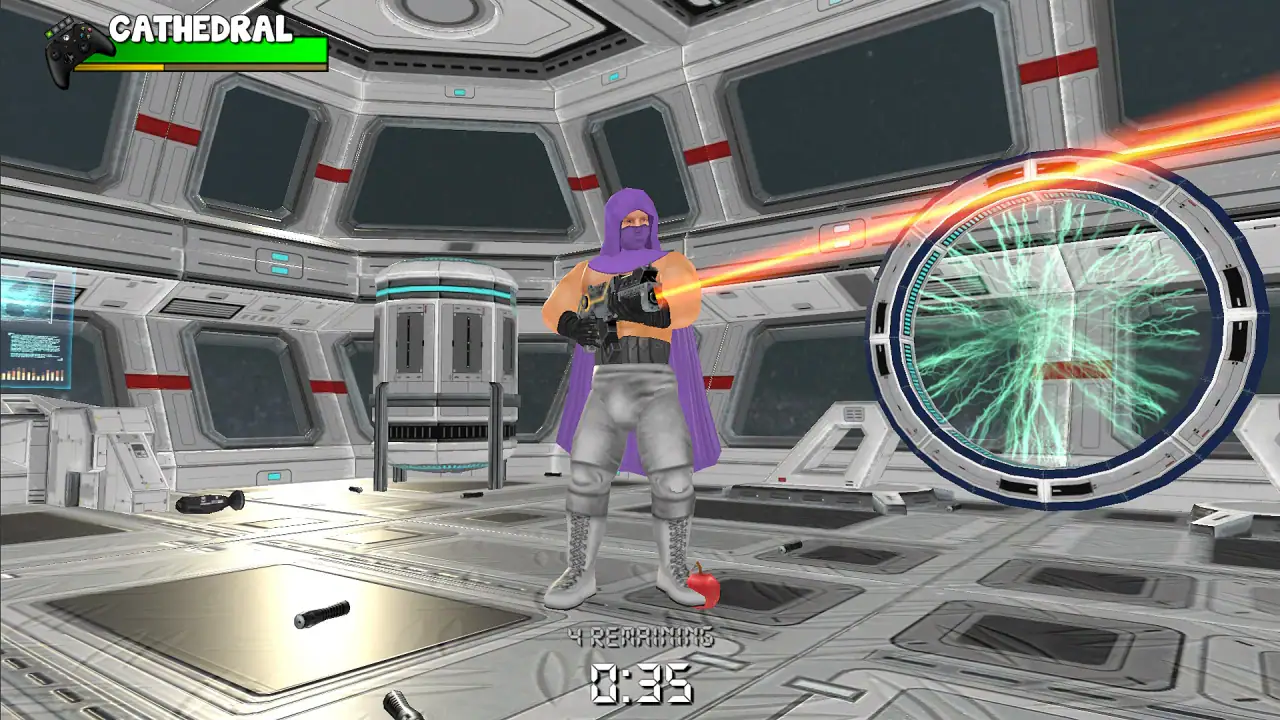
This is an important distinction from many familiar mobile adventures. In a conventional alternative, progress is often communicated through a sequence of levels, equipment upgrades, and clearly numbered stages. Here, the sense of movement can come from changing circumstances and new possibilities. That makes progress less tidy, but it also gives individual sessions more personality.
My practical advice is to keep track mentally of what caused a major change. If a meeting, battle, or decision produces an unexpected consequence, I treat that event as information rather than as a failure of the game to follow my plan. This mindset makes the experience easier to understand. The game becomes a series of connected situations instead of isolated tasks.
There is also a useful tension between immediate success and long-term control. Winning one encounter may solve a short-term problem while creating a larger one later. I found that pausing before every confrontation was often smarter than rushing toward the most obvious objective. That small habit makes the world feel less random because I am actively considering likely consequences.
The difficulty curve depends on judgment as much as ability
The challenge does not feel like a simple climb from easy stages to hard stages. Since the game emphasizes a living conflict and open possibilities, difficulty can rise when I make a poor choice, enter a situation without preparation, or underestimate how many problems are connected to one another. In that sense, the curve is partly controlled by my behavior.
This can be satisfying for experienced players. I enjoy games where learning the situation is as important as improving a character, and Infinite Lives often rewards caution more than blind aggression. A player who observes first can sometimes avoid a costly mistake, while someone who treats every encounter as a fight may create unnecessary pressure.
Still, the same design can feel uneven. A sudden setback may seem harsh if I have not yet understood why a situation became dangerous. The game asks me to learn through consequences, and that is not ideal for everyone. Players seeking a smooth, predictable difficulty curve may prefer a more conventional adventure with explicit tutorials and carefully measured encounters.
I also would not describe this as a relaxing game to play while half distracted. The open structure means that attention matters. If I ignore what is happening around me, I can lose track of why the current objective changed or why a previously manageable problem now feels urgent. Short sessions work well, but they are more enjoyable when I give the game enough focus to remember the context.
Unlocks and new possibilities are more motivating than a simple reward screen
The strongest progression feeling comes from having more ways to approach the world. I do not need every reward to be a dramatic power increase. Sometimes the value of progress is that it opens a different route, changes how I handle a conflict, or gives me a reason to revisit an earlier situation with a new plan.
This is where the game separates itself from a standard mobile action adventure. In many alternatives, unlocking something mainly means becoming stronger for the next stage. Here, I am more interested in whether an unlock changes the decisions available to me. A new possibility is worthwhile when it affects strategy, not merely when it makes familiar encounters quicker.
That said, players should not expect every reward to produce instant excitement. Open-ended progression can be subtle. The benefit may only become clear after I use it in the right context, and that requires experimentation. I found it helpful to test new options in lower-pressure situations before committing them to a major conflict.
The game’s free price makes trying that approach easy. It can be sampled without paying at the start, while optional in-app purchases cost $3.99 per item. I would personally avoid buying anything until I understood whether the base experience already suited my preferred pace. The free entry point is a genuine advantage, but optional purchases can still create pressure for players who feel they must speed up progress rather than learn the systems naturally.
Retention comes from uncertainty, but uncertainty can also become friction
The reason I can imagine returning to Infinite Lives is that a session does not always unfold as expected. The combination of superhuman and subhuman conflict creates room for different priorities, and an apparently small choice can change what deserves attention next. That unpredictability gives the game a stronger replay impulse than a linear adventure that offers the same sequence every time.
However, retention works best when uncertainty is balanced with readable progress. If too many situations feel disconnected, I may stop seeing a reason to continue. The game is at its most compelling when I understand the immediate problem, recognize the possible cost of my response, and still have enough freedom to choose my own approach.
For an everyday scenario, I can see myself playing during a commute or in a short evening break, but I would set a modest goal before starting. I might use one session to resolve a particular conflict or investigate a new direction instead of expecting to complete a grand arc. That makes the open structure manageable. Without a small personal target, a brief session could end with the feeling that I moved around without accomplishing much.
This is also why the game may not suit someone who wants a clean, low-pressure mobile experience. If your ideal adventure is a guided story with obvious checkpoints, predictable rewards, and no need to remember a shifting situation, another title in the category would probably be a better fit. Infinite Lives asks for more personal interpretation, and that can feel like work when I only want a quick distraction.
The developer’s style is part of the appeal and part of the adjustment period
MDickie’s involvement gives the game a distinctive identity. The design feels more interested in unusual situations and player-driven outcomes than in presenting a perfectly controlled cinematic adventure. I appreciate that personality because it helps the game avoid feeling like another interchangeable mobile quest.
At the same time, that individuality means I have to accept some rough edges in the way the experience communicates itself. The game’s charm depends on reacting to its systems and situations rather than expecting every detail to be explained in a polished, linear manner. I would give it more time than I would give a conventional stage-based game before deciding whether it works for me.
The current version is 1.0.7, and the minimum operating system requirement is Android 7.1. That makes it accessible to a broad range of Android devices, although compatibility alone does not guarantee that every player will enjoy the same pacing. The important question is whether I like adapting to an unpredictable adventure rather than following a fixed route.
Who will get the most from the game
I think Infinite Lives is a strong choice for players who enjoy emergent stories, shifting conflicts, and the feeling that their decisions can send a session in an unexpected direction. It is especially suitable for people who like creating their own objectives inside a game rather than waiting for every goal to be handed to them.
It can also appeal to players who have grown tired of mobile adventures that reduce progress to repeating stages for slightly better rewards. The conflict between superhumans and subhumans gives this game a clear identity, while the open possibilities encourage experimentation. I found that the most memorable moments came from plans going wrong in an interesting way, not from simply completing a task as efficiently as possible.
I would skip it if I wanted a calm exploration game, a tightly written story with a guaranteed order of events, or a highly polished competitive experience. The mature rating should also be taken seriously. This is not a recommendation for younger players, and it is not the right pick for anyone uncomfortable with a game built around power struggles and confrontation.
My verdict on goals, challenge, and long-term pacing
After spending time with Infinite Lives, I see its progression as a conversation between the goals I choose and the consequences the world creates. The game does not rely solely on a straight line of increasingly difficult missions. Instead, it keeps me engaged by offering situations that can be approached in more than one way, then asking me to live with what follows.
That design sustains play when I set manageable goals, pay attention to changing circumstances, and treat setbacks as lessons. It becomes less effective when I expect constant guidance or immediate proof that every action has advanced me. The pacing is therefore personal: careful players may find a satisfying rhythm, while impatient players may experience confusion or unnecessary repetition.
For me, the free entry point makes the decision simple. I would try it without spending first, learn how its open-ended progression feels, and only consider an optional purchase if it genuinely improves the way I want to play. The game has enough personality to stand apart from more predictable adventure alternatives, but its unusual structure is also the main barrier.
Overall, I recommend it to mature players who want a flexible adventure shaped by conflict, choices, and unexpected turns. It is not a flawless or universally comfortable experience, yet it offers something many mobile games avoid: progress that feels connected to the story I create through my decisions. If that kind of freedom sounds more exciting than a perfectly marked path, this is worth exploring.
FAQs for Infinite Lives
What is Infinite Lives?
Infinite Lives is a casual mobile game focused on experimenting with different characters, objects, and environments. Instead of following a strict level-by-level structure, you can explore the available locations, interact with items, and discover unexpected reactions. Its simple controls make it accessible for younger players and casual gamers, while the variety of interactions encourages repeated play and creative experimentation.
Is Infinite Lives free to download and play?
Infinite Lives can generally be downloaded for free, although the exact availability of features may depend on the version and platform you use. Some content may be unlocked through optional purchases, advertisements, or additional downloads. Before installing, it is worth checking the app-store listing for current pricing, in-app purchase details, supported devices, and whether all locations or characters are included in the free version.
Does Infinite Lives require an internet connection?
Many of the game’s basic interactions can usually be enjoyed offline after the necessary files have been installed. However, an internet connection may still be required for downloading updates, accessing advertisements, restoring purchases, or receiving newly added content. If you plan to play while traveling, open the game once before going offline to confirm that the areas you want to use are available.
Is Infinite Lives suitable for children?
Infinite Lives is designed around playful exploration and generally has straightforward gameplay, making it approachable for children. Nevertheless, parents should review the age rating, advertising, and in-app purchase information before allowing independent play. Depending on the device version, online services or external links may also be present, so parental controls and purchase restrictions are recommended for younger users.
What devices support Infinite Lives, and is it safe to install?
Compatibility depends on the specific Android or iOS version, device model, and the edition available in your region. For the safest installation, download Infinite Lives only through the official Google Play Store or Apple App Store rather than third-party websites. Also check the requested permissions, available storage, and recent user reviews, since performance and compatibility can vary between older and newer devices.
Pros
- Unlimited attempts make it easier to practice difficult levels.
- Helpful for testing strategies without worrying about losing progress.
- Simple concept that is easy for new players to understand.
- Can make short gaming sessions feel more relaxed and accessible.
- Useful for players who prefer casual play over competitive pressure.
Cons
- May reduce the challenge and sense of achievement for some players.
- Could encourage repetitive play without much variety.
- Some features may require an internet connection to work properly.
- Ads or optional purchases may interrupt the overall experience.
- Not ideal for players looking for deep story or complex gameplay.


